 Scientific and
Technical Program
Scientific and
Technical Program
The 10th International Conference on Human Intelligent Systems and Disruptive Innovative Technologies (IHSI 2027) will be held at the University of Naples Federico II, Napoli, Italy, February 17-19, 2027.
If you have any question about your presentation or
poster then please contact Conference Administration with a detailed
message at admin@ihsint.org
IHSI 2027 Conference Address
Location: University of Naples Federico II
Address: Palazzo Gravina, Via Monteoliveto 3, 80134 Naples (Google Maps)
ⓘ
Hybrid conference program schedule is listed in Central European
Standard Time (CET) - Napoli Timezone
 12:00-14:00
(CET)
12:00-14:00
(CET)  19:30 - 22:00
  9:00-14:30
Program
Search:
IHSI 2027 Conference Scientific Program
|
|||||
| Wednesday Feb 17 | Conference Reception and Banquet | ||||
| 19:30 - 22:00 | (Registered Participants only - Dress: Business Casual , Photo ID Required) | ||||
|
|||||
| Plenary Session | Thursday Feb 18, 2027 9:00 - 10:00 Plenary Session |
||||
IHSI
2027 Conference Scientific and Technical
ProgramLocation: University of Naples Federico IIAddress: Palazzo Gravina, Via Monteoliveto 3, 80134 Naples (Google Maps)The conference scientific and Technical program will be posted Sept, 2026. |
|||||
| Welcome
and Opening Remarks |
Plenary
Speech: "The Human in Command of the
Algorithm: Oversight, Competence and Trust
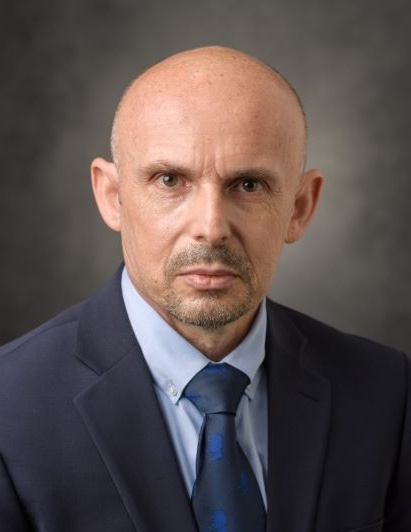
in Intelligent Systems Integration" Speaker: Dr. Dimitrios Ziakkas, FRAeS, Coventry University, UK Summary:
Intelligent systems no longer simply execute
instructions. They learn, recommend, and
explain themselves, while authority and
accountability remain with a named human
being: the captain, the surgeon, the
controller, the engineer. Speaking as both a
human factors academic and an active airline
captain and examiner, Dr. Ziakkas opens on a
long-haul flight deck at 02:40, where a
fatigued captain has ninety seconds to accept,
reject, or interrogate a decision aid's
recommendation before the decision makes
itself. From that moment the keynote argues
that integration is something a person
experiences in real time and under pressure,
and that the measure of an intelligent system
is whether its human partner can remain in
command of it.
The address
offers three answers. Oversight is a behavior,
and it is real only when the person has time,
independent information, competence, and the
authority to disagree without penalty. Drift
becomes more dangerous when learning systems
absorb everyday workarounds and reproduce them
at speed and scale, with the appearance of a
recommendation — a process the speaker and his
co-authors call Algorithmic Normalization of
Deviance. Competence in overseeing intelligent
systems can be defined, trained in simulation,
and protected across a career. Extending these
lessons from aviation to road transport,
healthcare, and industry, the keynote closes
with three commitments for the community:
design for the disagreement, audit what the
system has learned to call normal, and invest
in the human as deliberately as in the model.
|
||||